09 71 05 71 64 |
  contact@classpark.fr


Roissy in 20 years’ time: projects, expansions and the airport’s future
Against a backdrop where air travel, the environment and the competitiveness of international hubs are at the heart of infrastructure strategies, Paris-Charles-de-Gaulle Airport (Roissy-CDG) looks well beyond the coming years. From strategic planning to service innovation, this key hub in European air transport has far-reaching ambitions for the decades to come.
For travellers planning their upcoming holidays, study exchanges or business trips, understanding what Roissy will be like in 20 years’ time enables them to anticipate their logistical needs, including those relating to vehicle parking. In this context, solutions such as Class'Park Roissy, secure car park with a free shuttle bus to the airport, are a natural fit with the concept of seamless mobility within an infrastructure undergoing radical transformation.
A long-term spatial and strategic vision
Planning up to 2050
By 2035–2050, thethe Aéroports de Paris (ADP) Group presented a strategic planning vision for Paris-Charles-de-Gaulle. This vision emphasises controlled capacity growth, a restrained approach to construction, and a strong environmental and multimodal focus in the use of space. The project does not rely on massive terminal extensions or the creation of a new Terminal 4, but rather on the gradual modularisation of existing infrastructure.
This involves, in particular, changes to runways, transport links – particularly rail links – and optimising passenger flows to accommodate more passengers without expanding the airport’s size indefinitely. Discussions regarding this scenario were also the subject of a public consultation involving institutional stakeholders, local authorities and local residents.
The shift towards multimodal transport
In this vision, great importance is attached to connections between the aeroplane and other modes of transport, in particular the train. A rapid transit project, The CDG Express is set to provide a direct link between Paris-Gare de l’Est and the airport in 20 minutes, strengthening intermodality and access capacity: over the coming decades, this type of link could play a key role in relieving congestion on access roads.
Rail and road infrastructure in the vicinity of Roissy will therefore be developed to better accommodate passenger flows and optimise connections between different modes of transport.
Sustainability and carbon neutrality
Another key aspect of these projections is the energy transition and aligning operations with climate objectives. ADP plans to significantly reduce emissions from ground operations, to incorporate low-carbon energy sources and to accelerate the shift towards cleaner systems in the day-to-day running of the airport. This environmental aspect is intended to support growth in passenger numbers whilst meeting the decarbonisation requirements specific to modern aviation.
Operational improvements and passenger services
Internal organisation of the airport
Even without the construction of a major new terminal, Roissy-CDG Airport is undergoing a profound transformation in terms of operational and functional. One of the key priorities is to streamline passenger journeys and improve transit times between the terminal areas, check-in and boarding gates: this initiative aims to increase the airport’s overall efficiency and reduce bottlenecks.
Signage, the layout of the renamed terminals and the flow of traffic within the building are therefore being revised to create an ever-smoother travel experience.
Gradual increase in capacity
The projections in the strategic plan anticipate an increase in passenger numbers without any major expansion of the physical terminals. By 2035, the increase in capacity will entail a optimisation of existing facilities rather than a proliferation of new facilities. ADP’s aim is to achieve significant capacity – up to around 88 million passengers – whilst maintaining a balance between operational efficiency and regional development constraints.
In the longer term, by around 2050, some scenarios suggest passenger numbers could reach as many as 105 million a year, provided that technological and organisational improvements enable this growth to be accommodated.
Diversification of services
Roissy Airport is no longer just an air transport hub, but also a centre offering a range of associated services: shops, business areas, lounges, relaxation areas and accommodation. This diversification is part of the long-term strategy to make CDG a hub capable of competing with major international airports, incorporating a wide range of services centred on the passenger experience.
Impacts on the environment and local life
Nuisances and social acceptability
Discussions about the development of Roissy are raising issues relating to quality of life for local residents and noise or environmental nuisance. Some observers point to a tension between the ambition to increase air traffic and the need to manage its impact on local communities.
These debates influence development strategies, prompting planners to favour more modular and less intrusive solutions.
Management of peripheral areas
Le Grand Roissy – the group of local authorities surrounding the airport – is set to play a central role in supporting long-term projects, particularly in relation to service areas, transport and sustainable development. Public consultation is an integral part of this process, ensuring that local concerns are taken into account in planning for the coming decades.
Innovation to reduce emissions
In addition to ground operations, the airport works in collaboration with public and private sector organisations to integrate green technologies, alternative fuels and energy-efficiency solutions at every level of its operations, in line with French and European environmental policy.
A practical guide for today’s travellers
Access to the airport and car parks
Against the backdrop of these long-term developments, passengers travelling from Roissy who, either today or in the coming years, will need solutions reliable, practical and secure to manage their logistics before and after the flight.
This is where solutions such as Class'Park Roissy come into play. Located just a few minutes from the airport, this secure car park offers a service for affordable parking and secure, with a free shuttle service to the airport terminals or the TGV station.
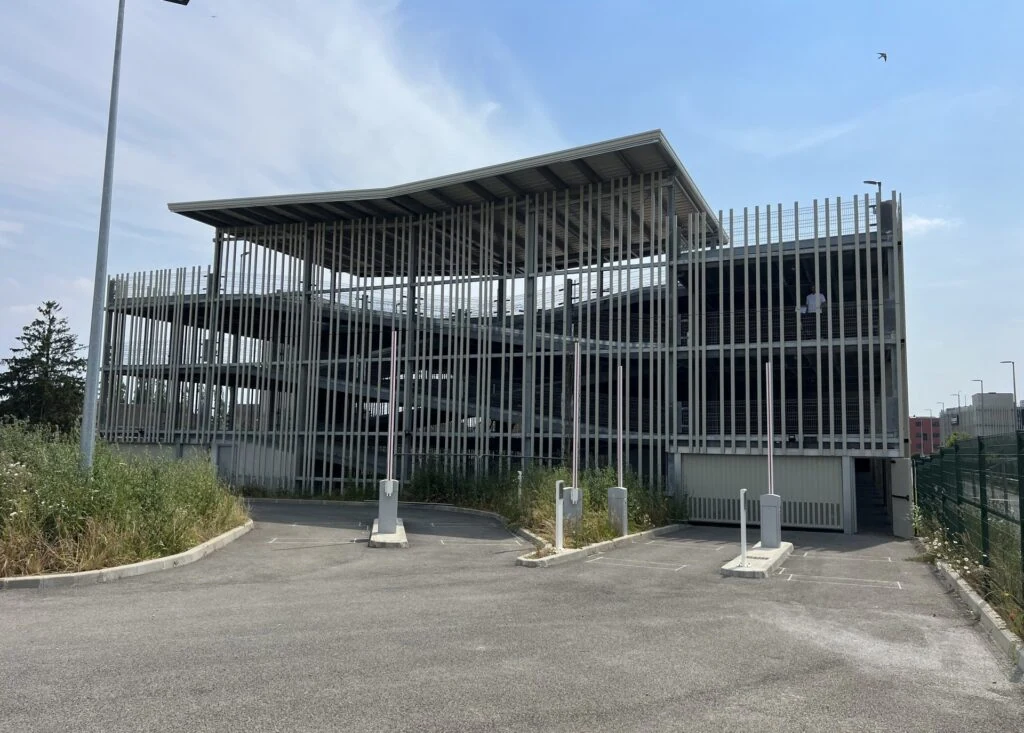
This type of service is particularly relevant in a changing environment, where transport around the airport must remain smooth and well-organised. A nearby car park, with 24-hour security and frequent shuttle buses, helps to optimise the passenger experience whilst integrating into the network of transport services linked to the airport.
Logistics and travel comfort
For travellers setting off on extended stays, business trips or holidays, having a Reliable and secure car park right next to Roissy enables you to plan the overland part of your journey with peace of mind. The addition of supplementary services – shuttle bus, valet parking, round-the-clock security – is in line with the needs of a customer base that values both safety and comfort.
In summary
Paris-Charles-de-Gaulle Airport will continue to evolve over the coming decades. Rather than embarking on excessive expansion, the plans envisaged up to 2050 prioritise a modularity, gradual adaptation and the integration of sustainable technologies. The focus on operational efficiency, multimodality and environmental management will shape the future of this major aviation hub.
For travellers, anticipating these changes and adapting to a changing transport landscape also means making use of practical solutions available today, such as use a secure car park near the airport. Class’Park Roissy offers a tailored solution to these needs, with services designed to ensure that every departure and return takes place under the best possible conditions.